Learn how to clean a greasy oven with 7 effective tips to remove stubborn grease, burnt-on food and grime from oven racks and glass doors.
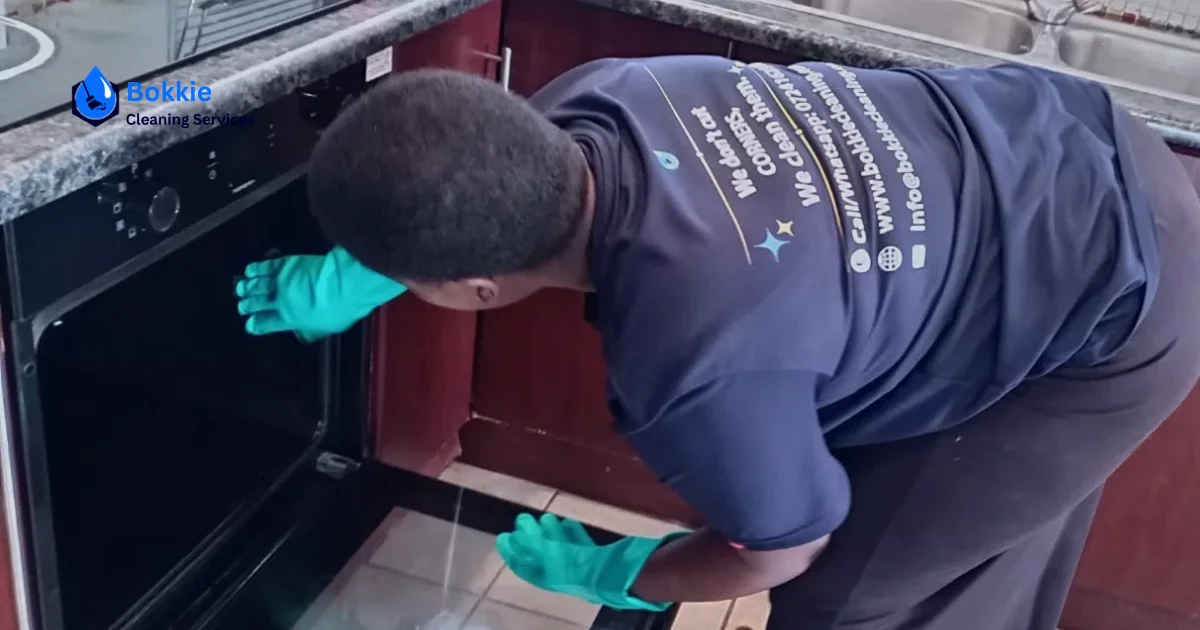
A greasy oven can be one of the most frustrating appliances to clean. Over time, cooking oils, food splatters and spills accumulate on oven walls, racks and glass doors, leaving behind stubborn stains that ordinary wiping cannot easily remove.
If you've been wondering how to clean a greasy oven without spending hours scrubbing, you're not alone. Many homeowners struggle with baked-on grease, particularly when the oven has not received a thorough cleaning for several months.
At Bokkie Cleaning Services, we understand that effective oven cleaning requires patience, suitable cleaning products and the correct techniques. Discover how our professional deep cleaning services can help you maintain a beautifully clean home. Whether you're dealing with greasy oven racks, cloudy glass doors or burnt-on food deposits, knowing where to start can make the process much easier.
In this guide, we'll explain seven practical methods for removing stubborn grease, protecting delicate surfaces and keeping your oven cleaner for longer.
Every time you roast, bake or grill, small amounts of oil, fat and food residue may splash onto the oven's interior surfaces.
As the oven heats up repeatedly, these deposits become increasingly difficult to remove.
Grease buildup commonly appears on:
Oven walls and the base.
Removable racks and shelves.
The inside of the glass door.
Corners and edges around the oven cavity.
Areas surrounding the cooking trays.
If these deposits are left unattended, they can cause unpleasant odours and smoke during cooking.
Regular maintenance helps prevent grease from becoming heavily baked onto surfaces, reducing the amount of effort required during future cleaning sessions.
A successful oven deep clean begins with preparation.
Before applying cleaning products, switch off the oven, allow it to cool completely and remove any loose trays or accessories.
Check the manufacturer's instructions to identify suitable products for the interior coating, glass door and removable racks.
Remember that different oven models may require different cleaning methods.
Bicarbonate of soda, commonly known as baking soda, can help loosen certain types of baked-on residue.For additional cleaning methods, explore Whirlpool's cleaning guide.
It is a useful option for oven surfaces where the manufacturer permits this cleaning method.
What you'll need:
Half a cup of bicarbonate of soda.
Approximately three tablespoons of water.
A small bowl.
A soft cloth or non-scratch sponge.
A plastic scraper, if suitable.
Cleaning method:
Mix the bicarbonate of soda and water to create a spreadable paste.
Apply a thin layer to suitable greasy surfaces inside the cool oven.
Avoid heating elements, ventilation openings, sensitive coatings and door seals.
Allow approximately 20–30 minutes for lighter deposits. Heavier buildup may require longer, where the manufacturer permits.
Gently loosen the softened residue using a suitable non-scratch cleaning tool.
Wipe away the paste thoroughly with a damp cloth.
Repeat the process where necessary rather than applying excessive pressure.
Bokkie's Tip: Always test a small area first. Bicarbonate of soda is not suitable for every oven finish, particularly some specialist self-cleaning surfaces.
Oven racks often collect grease, food spills and burnt-on residue.
Because they are removable, they can usually be cleaned separately, making it easier to reach the spaces between the bars.
Start by removing the racks once the oven has cooled.
For compatible plain-metal racks, fill a suitable container with warm water and an appropriate cleaning detergent.
Allow them to soak so the grease begins to soften.
For stubborn deposits, a manufacturer-approved degreasing product may be necessary.
Try these steps:
Place the racks in a suitable container.
Cover them with warm water and the recommended cleaning solution.
Allow sufficient soaking time according to the product instructions.
Use a suitable brush or non-scratch cleaning pad to loosen residue.
Rinse thoroughly with clean water.
Dry completely before returning the racks to the oven.
A cleaning brush can help reach the narrow spaces where grease accumulates.
Avoid aggressive scrubbing on coated, aluminium or telescopic racks, as their finishes and mechanisms may be damaged.
For heavily soiled racks, several gentle cleaning passes are often more effective than attempting to remove everything at once.
The inside of the oven glass door is one of the most frequently overlooked areas during kitchen cleaning.
Grease splashes, cooking oils and food residue can gradually create a brownish layer that reduces visibility through the glass.
Understanding how to clean a greasy oven also means knowing how to treat the glass door safely.
For compatible oven glass, a bicarbonate of soda paste may help loosen stubborn residue.
Apply the paste gently to the cool glass and allow it to rest for approximately 20 minutes, following the manufacturer's guidance.
Then wipe the surface using a damp microfibre cloth.
For remaining deposits, use a suitable non-abrasive cleaner approved for the particular oven glass.
Avoid steel wool, sharp metal scrapers and harsh abrasive powders, which can scratch or damage certain glass finishes.
Bokkie's Tip: Never allow cleaning liquid to run into the door edges, seals or ventilation openings.
If grease is trapped between the glass panels, consult the manufacturer's instructions or an appropriately qualified technician rather than dismantling the door yourself.
When cleaning an oven, it is easy to focus on large, visible surfaces while overlooking the smaller areas where grease accumulates. This attention to detail applies throughout the home. Explore our guide to 10 forgotten areas during house deep cleaning.
Corners, rack supports and the edges surrounding the oven cavity can trap stubborn dirt.
These areas may require more detailed attention because they are difficult to reach with an ordinary sponge.
Use a small, soft cleaning brush or an appropriate detailing tool to loosen accessible residue.
A slightly damp microfibre cloth can then help remove the loosened dirt.
Avoid pushing cleaning products into electrical components, heating elements or ventilation openings.
Do not force cleaning tools into narrow spaces that are not designed to be accessed.
Taking extra care with these details can make a noticeable difference to the overall appearance of your oven.
Sometimes, household cleaning methods are not sufficient to remove layers of stubborn, baked-on grease.
In these situations, a suitable commercial oven degreaser may help.
However, not every oven cleaner is appropriate for every appliance.
Some products contain strong alkaline ingredients that can damage incompatible surfaces or cause chemical burns if handled incorrectly.
Before using a degreaser:
Check that the product is approved for your oven model and surface.
Follow the manufacturer's recommended dilution and contact time.
Wear the protective equipment stated on the label.
Ensure suitable ventilation.
Keep children and pets away from the cleaning area.
Remove all product residue according to the instructions.
Never mix different cleaning chemicals, including bleach, ammonia, acids or other degreasers.
For self-cleaning ovens, always follow the appliance manual, as some commercial oven cleaners are specifically prohibited.
Bokkie's Tip: Choosing the correct product is more important than choosing the strongest product. Effective cleaning should never come at the expense of surface safety.
When learning how to clean a greasy oven, it is important to understand that excessive scrubbing is not always the best solution.
Modern ovens may contain enamel coatings, catalytic liners, specialised cleaning surfaces and sensitive components.
These materials can be damaged by harsh chemicals, abrasive pads or unsuitable tools.
Start with the least aggressive cleaning method recommended by the manufacturer.
Allow suitable cleaning products to work for their recommended contact time before attempting to loosen stubborn deposits.
For baked-on food, use a suitable plastic scraper only where permitted.
Avoid scraping aggressively or applying pressure to delicate surfaces.
If your oven includes a self-cleaning or steam-cleaning function, consult the instruction manual before using it.
Some cycles require the removal of racks and accessories, while other models have specific restrictions.
Remember: A clean oven should not only look good but also remain safe and functional after cleaning.
One of the easiest ways to reduce difficult oven cleaning is to prevent grease from accumulating in the first place.
Small maintenance habits can make a significant difference over time.For more practical home maintenance advice, follow our spring cleaning checklist for Capetown homes.
After cooking, allow the oven to cool before wiping away accessible fresh spills with a suitable cloth.
Remove food residue from compatible trays and racks before it becomes heavily baked on.
Avoid allowing grease to accumulate around the glass door and oven corners.
When roasting or baking, use suitable trays that help contain food drippings without blocking airflow.
It is also helpful to check the oven regularly for residue that may cause smoke during future cooking.
The frequency of detailed oven cleaning depends on how often you cook, the types of food prepared and the amount of grease produced.
A household that frequently roasts meat or prepares oily meals may require more regular attention than one that uses the oven occasionally.
Even when you understand how to clean a greasy oven, certain mistakes can make the process more difficult or damage the appliance.
Scrubbing too aggressively: Hard abrasive tools may scratch glass, stainless steel or protective coatings.
Mixing cleaning products: Combining household chemicals can cause dangerous reactions and release harmful fumes.
Using excessive water: Water entering electrical components, controls or door seals may cause damage.
Cleaning a hot oven: Hot surfaces increase the risk of burns and may react unpredictably with cleaning products.
Ignoring product instructions: Every cleaning solution has specific application requirements and safety precautions.
Taking the time to clean correctly can help protect your appliance and achieve more consistent results.
Although routine oven maintenance can often be completed at home, heavily soiled appliances may require more detailed attention.
Professional deep cleaning can be helpful when grease has accumulated over an extended period or when you want a more thorough kitchen clean.
At Bokkie Cleaning Services, we understand the importance of addressing visible dirt and commonly overlooked areas.
A detailed kitchen deep clean can include suitable attention to accessible oven surfaces, removable racks and glass doors, depending on the agreed service scope.
Before booking, confirm which oven-cleaning tasks are included and whether any specialist treatment is required.
Professional cleaners should also follow manufacturer guidance to avoid damaging sensitive oven components.
A bicarbonate of soda and water paste can be a useful starting point for compatible oven surfaces.
Apply the mixture to suitable areas, allow time for the residue to soften and gently wipe it away.
For oven racks, soaking in warm water with a suitable detergent may help loosen accumulated grease.
Always check the manufacturer's instructions before applying any homemade cleaning mixture, particularly to specialised coatings.
The most suitable method depends on the type of rack and its protective finish.
For compatible removable racks, soaking in warm water with an appropriate detergent can help soften greasy buildup.
A suitable cleaning brush may then be used to loosen deposits.
For particularly stubborn grease, a rack-safe degreaser may be necessary.
Avoid harsh chemicals or abrasive tools on coated racks unless the manufacturer specifically allows them.
There is no single cleaning schedule suitable for every household.
The ideal frequency depends on how often the oven is used and how much grease accumulates during cooking.
For frequently used ovens, inspecting the interior and cleaning visible spills regularly can help prevent stubborn buildup.
A more thorough clean should be completed whenever significant grease deposits, burnt-on residue or persistent cooking odours develop.
Consistent maintenance usually makes future cleaning easier and helps keep your oven in better condition.
Learning how to clean a greasy oven does not mean spending hours scrubbing stubborn stains.
The secret is understanding which cleaning methods are suitable, allowing products enough time to work and paying attention to often-overlooked areas.
From removing grease on oven racks to restoring the appearance of the inner glass door, every detail contributes to a cleaner kitchen.
At Bokkie Cleaning Services, we believe thorough cleaning is about more than appearances. It is about creating a fresh, comfortable and well-maintained home.
Whether you need assistance with a detailed kitchen clean or a complete home deep cleaning service, our team is ready to help.
Ready to give your kitchen the attention it deserves?
Contact Bokkie Cleaning Services to discuss your cleaning requirements and book your next deep cleaning appointment.
Call or WhatsApp: 072 416 2547
Website: www.bokkiecleaning.co.za
Bokkie Cleaning Services, Because every detail matters.
